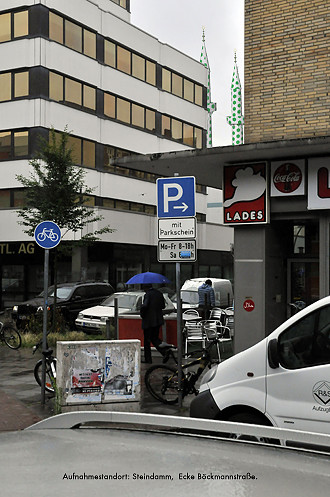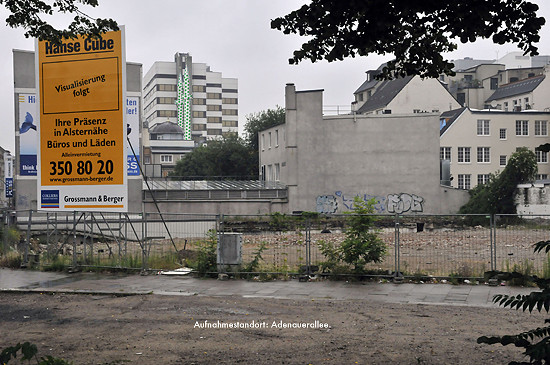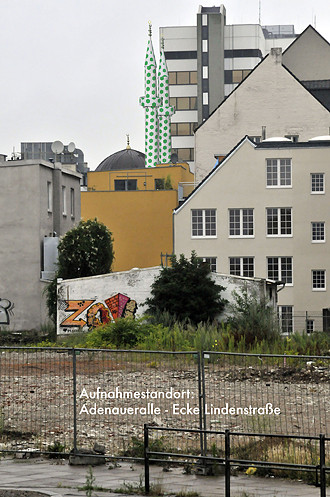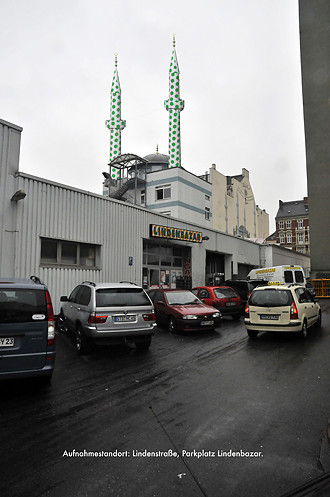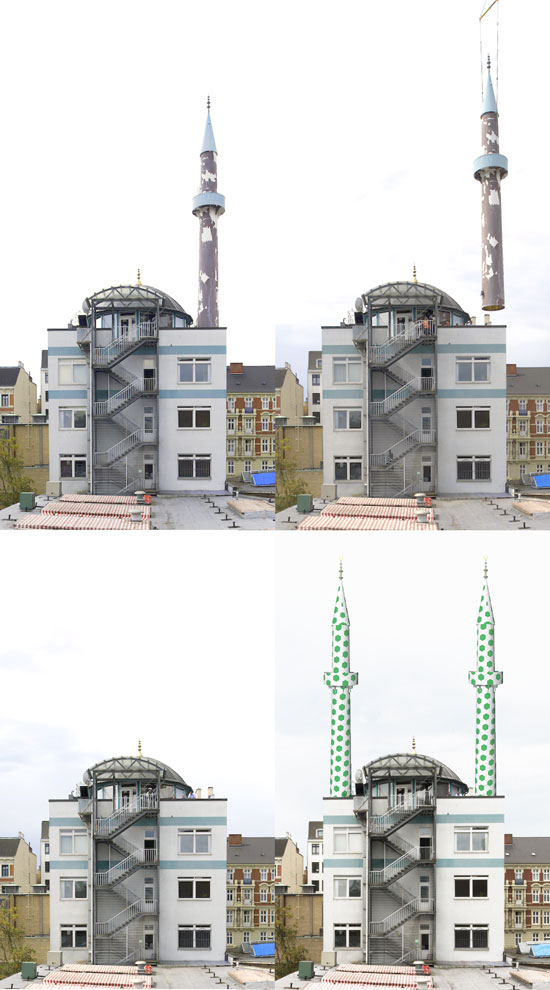
[Die Centrum Moschee, Darstellung vor und nach der Bearbeitung]
History of the minarets
Todays Center Mosque was not built as an islamic temple: At the beginning of the 20th century the building in the Böckmannstraße 40 hosted the Hammonia Bath. In 1977 the islamic community bought the building and inaugurated it as a mosque. In 1990 a dome and the two minarets were added, thus completing the picture of a regular mosque.
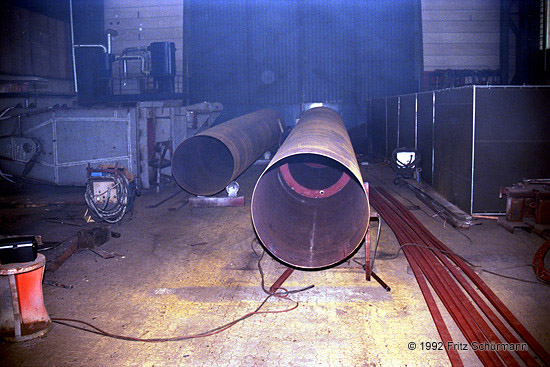
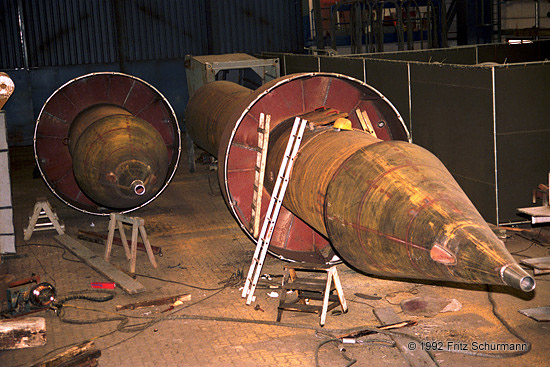
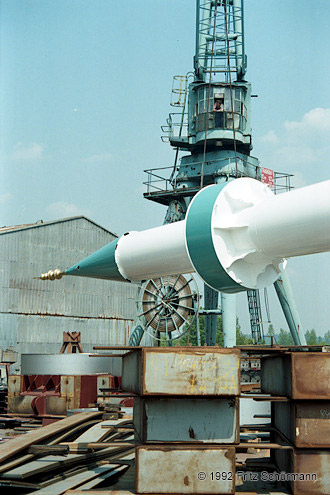
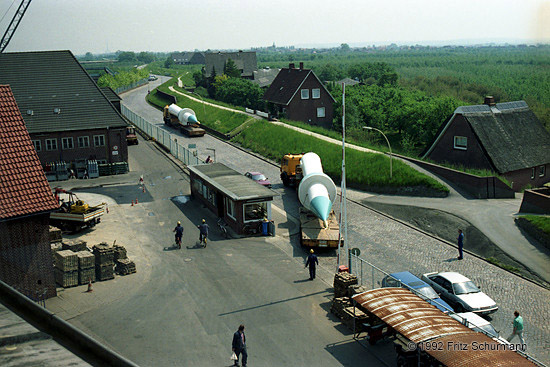
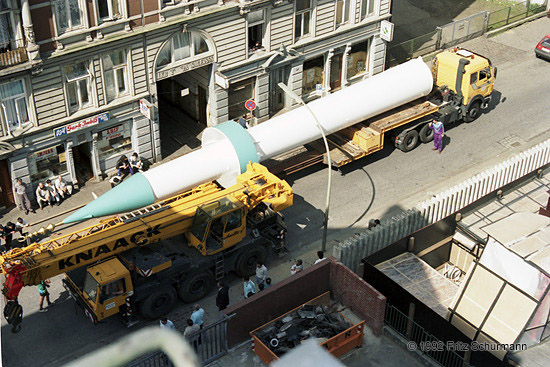
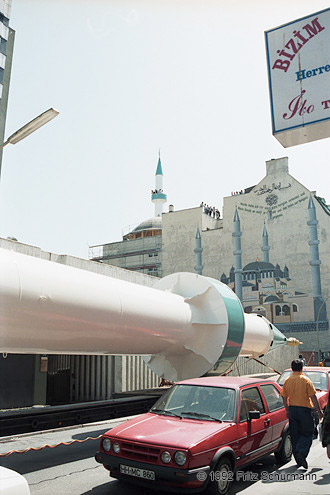
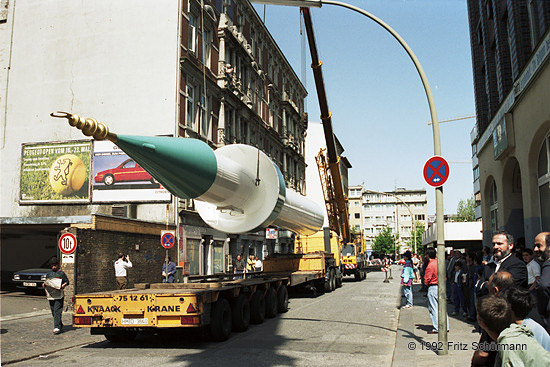
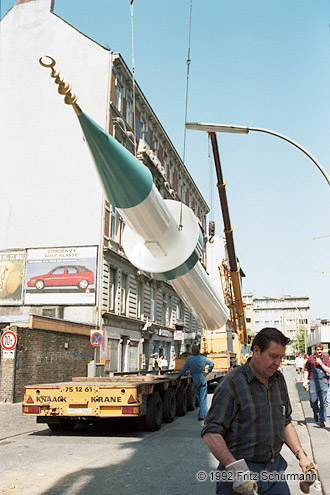
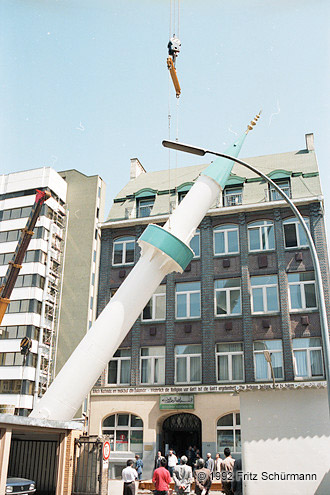
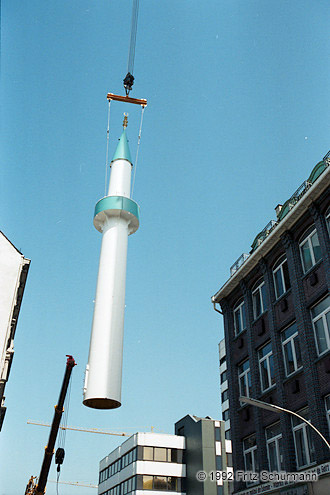
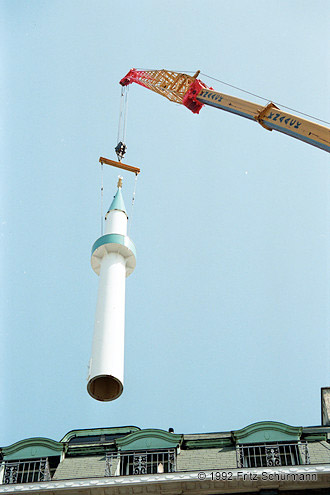
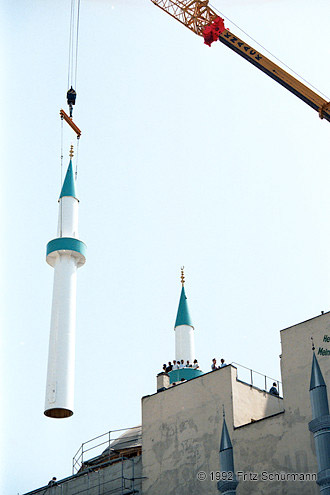
In 1992 the Sietas Shipyard in Hamburg constructed the two steel towers. They are both 20 meters high and weigh 7.1 tons. An extension was put to the lower end of the towers so that they can be fixed to the building with screws.
The minarets of the Center mosque may easily be the only ones in the world which are made out of steel. Furthermore they are the only ones which can be screwed and unscrewed to a building. And – as common in shipbuilding – they received a coating resistent to seawater.
Zehn Jahre später begann der weiße Anstrich der Türme allerdings abzublättern. Despite of this coating only ten years after construction the paint began to peel.
Todays Center Mosque was not built as an islamic temple: At the beginning of the 20th century the building in the Böckmannstraße 40 hosted the Hammonia Bath. In 1977 the islamic community bought the building and inaugurated it as a mosque. In 1990 a dome and the two minarets were added, thus completing the picture of a regular mosque.
In 1992 the Sietas Shipyard in Hamburg constructed the two steel towers. They are both 20 meters high and weigh 7.1 tons. An extension was put to the lower end of the towers so that they can be fixed to the building with screws.
The minarets of the Center mosque may easily be the only ones in the world which are made out of steel. Furthermore they are the only ones which can be screwed and unscrewed to a building. And – as common in shipbuilding – they received a coating resistent to seawater.
Zehn Jahre später begann der weiße Anstrich der Türme allerdings abzublättern. Despite of this coating only ten years after construction the paint began to peel.
قصة المنارتين
لم يكن المسجد المركزى الحالى دائماً بيت الله الإسلامى حيث أنه مع بداية القرن المنصرم احتوى المبنى الواقع فى شارع
Böckmannstraße 40
على حمّام هامونيا. فى عام ١٩٧٧ قامت الجمعية الإسلامية بشراء المبنى وتحويله إلى مسجد، وفى عام ١٩٩٠ تواصل البناء لتكتمل صورة المسجد الخارجية من خلال القبة والمئذنتين.
فى عام ١٩٩٢ صنعت شركة زيتاس للترسانة البحرية بهامبورج كلا البرجين الصلبين، إرتفاع الواحد منهما ٢٠ متراً ووزنه ٧,١ طناً،وبالإضافة إلى ذلك فقد طُرح تصميم هندسى يساعد فى تركيب البرجين على المسجد.
منارتى المسجد المركزى هما تقريباً المنارتان الوحيدتان فى العالم اللتا صنعتا من الصلب ، وبالتالى الوحيدتان القابلتان للحل والربط. وجدير بالذكر أن المنارتين مبطنتان بمثبت ماء البحر، كما هو معلوم أنه من خصائص الترسانة البحرية،
وبعد عشر سنين بدأ اللون الأبيض المنقوش على المنارتين أن يتقشر
لم يكن المسجد المركزى الحالى دائماً بيت الله الإسلامى حيث أنه مع بداية القرن المنصرم احتوى المبنى الواقع فى شارع
Böckmannstraße 40
على حمّام هامونيا. فى عام ١٩٧٧ قامت الجمعية الإسلامية بشراء المبنى وتحويله إلى مسجد، وفى عام ١٩٩٠ تواصل البناء لتكتمل صورة المسجد الخارجية من خلال القبة والمئذنتين.
فى عام ١٩٩٢ صنعت شركة زيتاس للترسانة البحرية بهامبورج كلا البرجين الصلبين، إرتفاع الواحد منهما ٢٠ متراً ووزنه ٧,١ طناً،وبالإضافة إلى ذلك فقد طُرح تصميم هندسى يساعد فى تركيب البرجين على المسجد.
منارتى المسجد المركزى هما تقريباً المنارتان الوحيدتان فى العالم اللتا صنعتا من الصلب ، وبالتالى الوحيدتان القابلتان للحل والربط. وجدير بالذكر أن المنارتين مبطنتان بمثبت ماء البحر، كما هو معلوم أنه من خصائص الترسانة البحرية،
وبعد عشر سنين بدأ اللون الأبيض المنقوش على المنارتين أن يتقشر
 1992
1992
History of the project
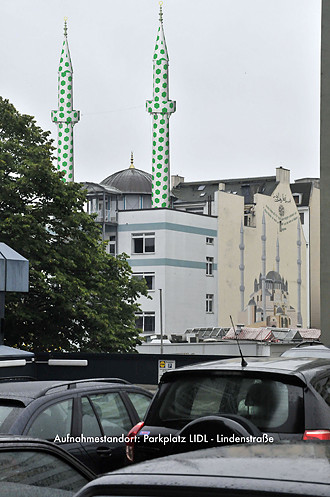
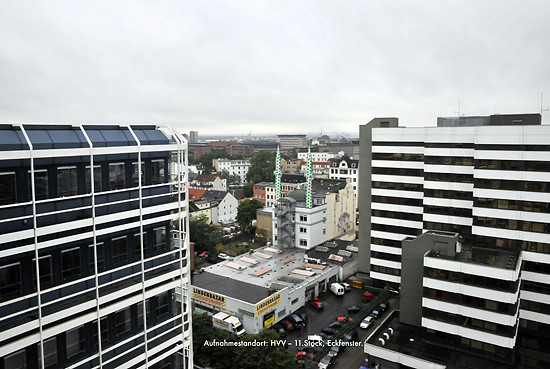
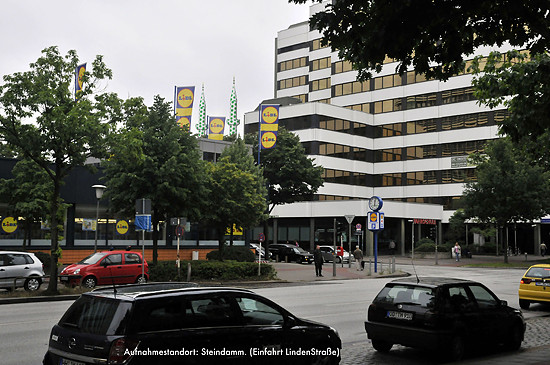
You only have seconds to catch a glimpse of the minarets of the Center Mosque when you are on your way on the Steindamm. A temporary traffic light at a construction site switched to red while Boran Burchhardt approached it and so he had some time to enjoy the best possible view of the minarets while waiting for the green light.
He noticed the shabby appearance of the minarets. And because he was on his way home from a paint job, he thought: This is where I have to continue. And when he was invited to an art project around the Steindamm in spring 2008, it was clear to him that the minarets needed to be painted up.
Originally Burchhardt had planned something else: With the help of Hamburg’s Fire Department and one of their mobile ladders volunteering passers-by equipped with brush and paint would have been carried up to the minarets. After several days the minarets would have been painted white again.
But when the artist explained his ideas to Ramazan Ucar, Imam of the Center Mosque, he also showed a catalogue depicting one of his former exhibitions. In this exhibition he had displayed artwork made out of hexagonal structures. The Imam asked Burchhardt whether it would be possible to have the paint-up done with this pattern? Ucar felt drawn to the honeycomb, while his representative who had also attended this meeting, liked the idea of having a football-like coating on the towers.
You only have seconds to catch a glimpse of the minarets of the Center Mosque when you are on your way on the Steindamm. A temporary traffic light at a construction site switched to red while Boran Burchhardt approached it and so he had some time to enjoy the best possible view of the minarets while waiting for the green light.
He noticed the shabby appearance of the minarets. And because he was on his way home from a paint job, he thought: This is where I have to continue. And when he was invited to an art project around the Steindamm in spring 2008, it was clear to him that the minarets needed to be painted up.
Originally Burchhardt had planned something else: With the help of Hamburg’s Fire Department and one of their mobile ladders volunteering passers-by equipped with brush and paint would have been carried up to the minarets. After several days the minarets would have been painted white again.
But when the artist explained his ideas to Ramazan Ucar, Imam of the Center Mosque, he also showed a catalogue depicting one of his former exhibitions. In this exhibition he had displayed artwork made out of hexagonal structures. The Imam asked Burchhardt whether it would be possible to have the paint-up done with this pattern? Ucar felt drawn to the honeycomb, while his representative who had also attended this meeting, liked the idea of having a football-like coating on the towers.
قصة المشروع
لا يحتاج المرء لأكثر من ثانية حتى يفوز بنظرة إلى منارتى المسجد المركزى من الشارع .إن إشارة مرور للمعمار فى المكان المناسب فى شارع المرور الرئيسى أدت فى صيف ٢٠٠٧ عندما كانت حمراء إلى حصول بُران بُرشهارت على أفضل رؤية ممكنة للمنارتين عندما كان واقفا ينتظر الإشارة الخضراء
،عندئذ انتبه إلى حال المنارتين الرث، وفى الطريق إلى البيت جاءته فكرة تجديد المنارتين. فى ربيع ٢٠٠٨ كُلف بالإشتراك فى مشروع فنى فى محيط المنطقة و أجاب على الفور: المنارتان يجب أن تلونا
، خطط بُرشهارت فى البداية لعملية تستغرق عدة أيام: بمساعدة مطافى هامبورج يستطيع المارة أن يصعدوا إلى المنارتين بواسطة سيارة ذات سلم و بتوفير سطل اللون والفرشاة يمكنهم تجديد لون البرجين الأبيض
، Fakat sanatçı merkez cami imamı Ramazan Uçar’a fikrini sunduğunda, Ramazan Uçar sanatçıya ait bir kataloğa baktıktan sonra, minareler ora daki desen ile boyanamaz mı diye sordu. Burchhardt sanatsal alanda altıgenler ile ilgilenmişti. İmam altıgenlerde petek deseni görürken, toplantıda bulunan yardımcısı futbol ile ilgili bir desen görüyordu.
لا يحتاج المرء لأكثر من ثانية حتى يفوز بنظرة إلى منارتى المسجد المركزى من الشارع .إن إشارة مرور للمعمار فى المكان المناسب فى شارع المرور الرئيسى أدت فى صيف ٢٠٠٧ عندما كانت حمراء إلى حصول بُران بُرشهارت على أفضل رؤية ممكنة للمنارتين عندما كان واقفا ينتظر الإشارة الخضراء
،عندئذ انتبه إلى حال المنارتين الرث، وفى الطريق إلى البيت جاءته فكرة تجديد المنارتين. فى ربيع ٢٠٠٨ كُلف بالإشتراك فى مشروع فنى فى محيط المنطقة و أجاب على الفور: المنارتان يجب أن تلونا
، خطط بُرشهارت فى البداية لعملية تستغرق عدة أيام: بمساعدة مطافى هامبورج يستطيع المارة أن يصعدوا إلى المنارتين بواسطة سيارة ذات سلم و بتوفير سطل اللون والفرشاة يمكنهم تجديد لون البرجين الأبيض
، Fakat sanatçı merkez cami imamı Ramazan Uçar’a fikrini sunduğunda, Ramazan Uçar sanatçıya ait bir kataloğa baktıktan sonra, minareler ora daki desen ile boyanamaz mı diye sordu. Burchhardt sanatsal alanda altıgenler ile ilgilenmişti. İmam altıgenlerde petek deseni görürken, toplantıda bulunan yardımcısı futbol ile ilgili bir desen görüyordu.
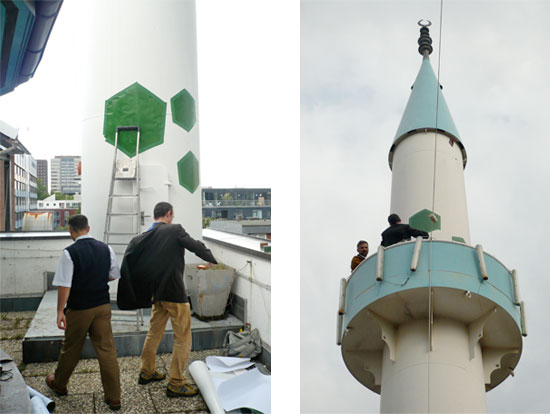
[Testkleben]